How to Run a Successful Product Strategy Workshop
Hyrdle Team
Management Consultancy
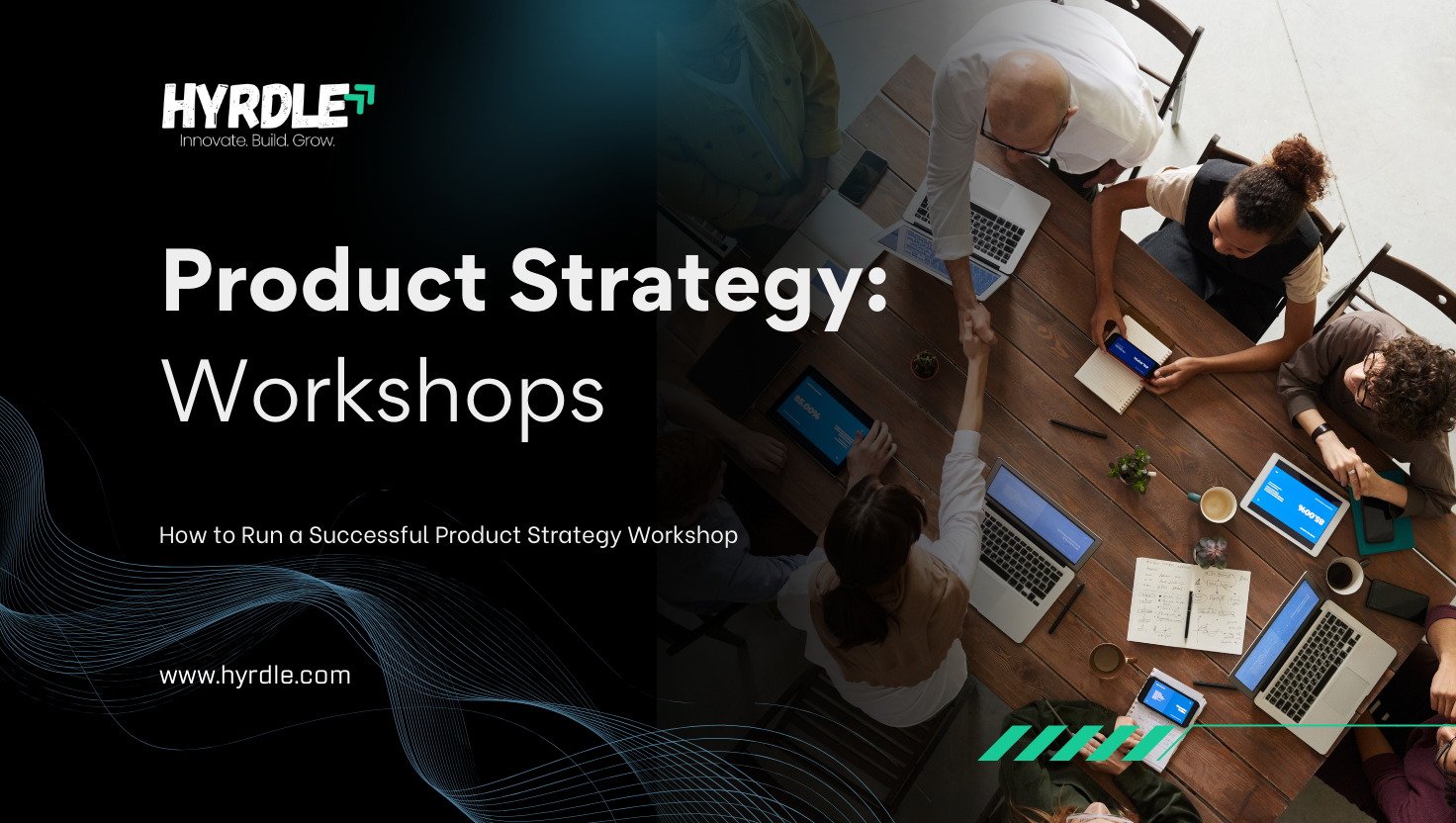
A well-run product strategy workshop can be the difference between building a successful, user-centred product - or wasting months of time and budget building the wrong thing. At Hyrdle, we’ve facilitated countless workshops that set the foundation for products across industries - especially in the fast-evolving world of AI-powered products.
In this blog, we’ll walk you through how to plan and execute a product strategy workshop, with real-world examples focused on AI tools and platforms.
What is a Product Strategy Workshop?
A product strategy workshop is a collaborative session that aligns stakeholders on:
What problem you’re solving
Who your users are
What success looks like
What to build first (and what not to)
It’s about setting direction before you write a line of code.
Why It’s Essential for AI Products
AI products often carry additional complexity:
Data dependencies
Uncertainty around model capabilities
Ethical considerations
Longer R&D cycles
A strategy workshop helps reduce that ambiguity and get everyone aligned on realistic outcomes.
Step-by-Step: Running a Successful Workshop
1. Set Clear Objectives
Before the session, clarify what you want to walk away with. Examples:
Prioritised list of AI product use cases
Defined user personas and value propositions
Risk assessment of building vs. integrating models
Example: For a client building an AI recruitment assistant, the goal was to define which tasks the assistant would automate first: CV screening, candidate matching, or interview scheduling.
2. Invite the Right People
Include cross-functional stakeholders:
Product manager or founder
UX designer
Engineer or AI lead
Data team member (if available)
Business decision-makers
Tip: Keep it lean (4–7 people), but diverse in perspective.
3. Start with the Problem
Ask: “What’s the core problem we’re solving - and for whom?”
Use frameworks like:
Jobs to Be Done (JTBD)
Problem Framing Canvas
Lean Value Tree
Example: In an AI-powered customer support project, the team identified that users were frustrated by wait times - not the support quality - leading to the decision to prioritise chatbot development.
4. Map the User Journey
Build empathy by mapping the current and future user experience.
Use tools like:
Empathy maps
Service blueprints
AI capability overlays (what can be automated?)
Example: For a bedtime story app using generative AI, the team mapped the parent’s journey from signup to story generation to bedtime reading - identifying key emotional moments and friction points.
5. Prioritise Opportunities with AI in Mind
Not every task is right for AI. Use criteria like:
Data availability
Repetitiveness of the task
Risk tolerance
Potential value (time saved, UX improved, revenue generated)
Use prioritisation methods like:
RICE (Reach, Impact, Confidence, Effort)
MoSCoW (Must, Should, Could, Won’t)
6. Sketch the First Product (MVP)
Define what your Minimum Viable Product looks like:
Key features and flows
User input/output expectations
What the AI does (vs. what the user controls)
Example: For an AI financial assistant, the MVP focused only on expense classification and basic forecasting - not full financial advisory features.
7. Define Success Metrics
What does success look like?
For users (e.g. reduced time spent, improved accuracy)
For the business (e.g. cost savings, conversions, retention)
Make sure to align on both qualitative and quantitative KPIs.
Tips for Facilitating a Great Workshop
Use collaborative whiteboards like Miro or FigJam
Set timeboxes and keep things moving
Encourage wild ideas - then bring it back to feasibility
End with clear next steps and owners
Final Thoughts
A product strategy workshop is one of the most important steps in building an AI product. It sets the vision, surfaces risks early, and aligns the team before investing in design and development.
At Hyrdle, we run these workshops as part of our discovery process with clients who want to build with clarity, confidence, and creativity.
Want help running your own AI product strategy workshop? Get in touch and let’s plan it together.
Not sure where your technology stands? Find out in 2 minutes - free.